
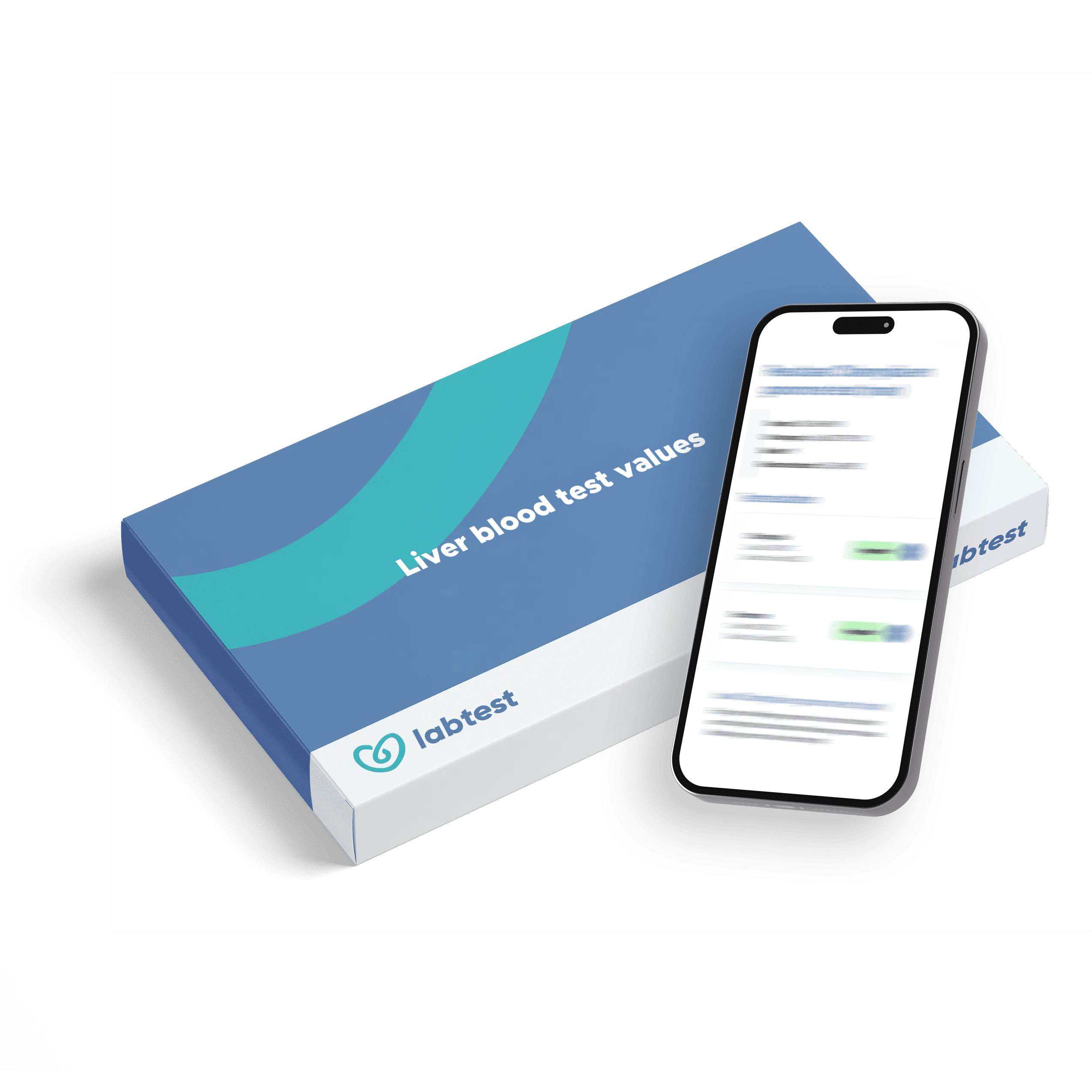










Liver blood test values

The liver function test measures several important indicators of your liver health.

Controleer meerdere cruciale markers voor een gezonde lever, doe onze leverwaarden bloedonderzoek test. Test jezelf eenvoudig vanuit huis en ontvang de uitslag van een gecertificeerd lab.

  •  
  • Test anonymously from home
  • ISO-certified laboratory
  • Reliable, discreet and secure
  • Pickup point / parcel locker available
  • Results validated by a biochemist
Now 43,00

Liver blood test values

Check your liver health in time, right from the comfort of your own home. Your liver is vital: it filters your blood, supports your metabolism and helps digest fats. However, liver problems often cause symptoms only after significant damage has already occurred. With our home liver function test, you can easily gain insight into your liver health. The test measures important liver enzymes that may indicate whether your liver is under strain or damaged. This can help identify early signs of liver disease and allow you to take action before complications develop.


Testing method

Finger-prick test

We test for:

43,00

  • Discreet verpakt en anoniem getest
  • Past door de brievenbus
  • Getest in ISO-gecertificeerd laboratorium
  • Pickup Point / pakketautomaat mogelijk
  • Resultaat gevalideerd door biochemicus
  • Meer dan 1.800 mensen gingen je voor. Beoordeeld met een 9,7!

What does a liver function test involve?

Your liver is a powerful organ that performs several essential functions. Among other things, the liver is responsible for:

  • Removing waste products and toxins from your blood
  • Producing bile, which is important for digestion
  • Producing cholesterol and lipid transport proteins
  • Processing haemoglobin, a component of red blood cells
  • Regulating blood clotting
  • Converting excess glucose into glycogen for energy storage

With our home liver function test, you can measure the levels of important liver enzymes in your blood. The test measures:

  • ALAT (alanine aminotransferase)
  • ASAT (aspartate aminotransferase)
  • Gamma-GT (gamma-glutamyl transferase)
  • ALP (alkaline phosphatase)
  • Bilirubin

Elevated levels of one or more of these markers may indicate liver damage or liver disease. The test is based on a simple finger prick and is analysed by an accredited laboratory. You will usually receive your result one day after your sample has been received by the laboratory, via your personal online dashboard.

Why choose a liver function test?

A liver function test may be useful if you:

  • Take medication that may put strain on your liver
  • Have experienced stomach or intestinal problems in the past
  • Regularly drink alcohol, particularly in larger amounts
  • Use performance-enhancing substances or recreational drugs
  • Have family members with liver problems

Even without symptoms, checking your liver function can be useful if you want to gain insight into how your body responds to diet, supplements or medication.

Symptoms of liver problems

Elevated liver enzymes do not always cause immediate symptoms. However, they can indicate liver damage or liver disease. In such cases, you may experience symptoms such as:

  • Reduced appetite
  • Persistent fatigue or exhaustion
  • Dark-coloured urine
  • Itching all over the body
  • Jaundice (yellowing of the skin and eyes)
  • Nausea and/or vomiting
  • Pale, loose or greasy stools
  • Unintentional weight loss
  • Pain or pressure in the abdominal area, particularly in the upper right side

If you experience several of these symptoms, it may be advisable to have your liver values checked, for example with our simple home test.

Alkaline phosphatase (ALP)

ALP is an enzyme found mainly in the liver, bile ducts and bones, but also in the heart, intestines, kidneys and placenta. An elevated ALP level may indicate:

  • Liver damage
  • Bile duct obstruction
  • Bone disorders

If the result is abnormal, further investigation is important to determine the underlying cause.

ALT (alanine aminotransferase)

ALT is found mainly in liver cells, but also in the kidneys, heart and muscles. An elevated ALT level in the blood often indicates liver damage. Possible causes include:

  • Liver inflammation
  • Bile flow obstruction
  • Alcohol consumption
  • Medication
  • Type 2 diabetes

A temporary elevation is possible, but if levels remain high, it is advisable to repeat the test or seek medical advice.

Gamma-glutamyl transferase (GGT)

GGT helps process substances such as alcohol, medication and toxins. Levels are often elevated in cases of:

  • Excessive alcohol consumption
  • Liver damage or inflammation
  • Gallbladder problems or bile duct obstruction

GGT is a sensitive marker of liver strain. If the level is abnormal, it may be advisable to review your lifestyle or medication use.

Bilirubin

Bilirubin is a waste product released when red blood cells break down. The liver processes bilirubin and excretes it through bile. An elevated level may indicate:

  • Problems with liver function
  • Bile duct obstruction

Symptoms may include:

  • Jaundice (yellowing of the skin and eyes)
  • Dark urine
  • Pale or greasy stools

AST (aspartate aminotransferase)

AST is an enzyme involved in the breakdown of amino acids. It is found in the liver, heart, brain and muscles.

Elevated AST levels can be caused by:

  • Liver damage
  • Alcohol consumption
  • Muscle damage, for example after intense exercise

A mild elevation does not necessarily indicate a problem, but higher or persistent elevations may require further investigation.

When can I expect my laboratory results?

Once you have sent your sample, the process is quick. You will usually receive your result one day after your sample has been received by the laboratory, via your personal online dashboard.

What does my test result mean?

This test measures the levels of the following liver markers in your blood:

  • ALAT (ALT)
  • ASAT (AST)
  • Gamma-GT
  • ALP (alkaline phosphatase)
  • Bilirubin

The results provide insight into your liver function. Test results provide a snapshot in time and can be influenced by factors such as diet, lifestyle, medication and the time of sample collection. Abnormal values do not automatically mean that you have a medical condition. Abnormal results may indicate strain or damage to the liver. If this is the case, it is advisable to contact your doctor for further investigation or advice.

What about my privacy?

We keep your testing as anonymous as possible. How do we do that?

Your order

Your order details are retained for as long as necessary and are removed from the webshop after 2 months.

Your test kit

Your order is delivered in discreet, unbranded packaging. The test kit itself also contains no visible information about what is being tested.

The laboratory

For an anonymous analysis, you can choose to share only your date of birth and gender with the laboratory. No other personal information is shared.

Your result

You can download your laboratory result for one month. After this period, we automatically delete the report.

Your account

You can delete your account at any time. If your account is inactive for 2 years, it will be automatically deleted.

How does it work?

Your result in four simple steps
Order a test
Step 1

Order a test

After placing your order, you will receive the test kit in discreet packaging. Use the information provided in the box to activate your test kit.
You will receive your order in discreet packaging.
Collect and send your sample
Step 2

Collect and send your sample

You can easily collect the samples yourself whenever it suits you and return them free of charge in the enclosed return envelope.
With our free return envelope.
Sample analysis
Step 3

Sample analysis

Once your sample has arrived at the laboratory, you will usually receive your test result within one working day.
Results usually within 1–2 working days.
Receive your results
Step 4

Receive your results

You will receive an email when your test result is ready, and you can view your result online in a secure environment.
View and download your results in your secure online account.

Frequently Asked Questions Everything about Liver blood test values

This home test is just as accurate and reliable as a test performed through your GP or in a hospital. Your blood sample is analysed in an ISO 15189-accredited laboratory, which means it meets the same strict quality standards as medical institutions.

This ensures you receive a professional and reliable result, simply from the comfort of your own home.

Yes, you can! With a home liver function test, you can easily collect your own blood sample using a finger prick.

You will receive a complete test kit, including a clear instruction manual and all materials needed to safely collect the blood sample. You then send the sample to one of our ISO 15189-accredited laboratories.

Within a few days, you will receive the reliable results online, including an explanation of the measured values.

A healthy liver is essential for your overall well-being. You can keep your liver in good condition by:

  • Eating a balanced diet – with enough vegetables, fruit, fibre, and healthy fats
  • Maintaining a healthy weight – being overweight increases the risk of fatty liver disease
  • Drinking alcohol in moderation – give your liver a break and avoid excessive alcohol consumption
  • Exercising regularly – at least 30 minutes a day is already effective
  • Avoiding harmful drugs – some medications or supplements can also put strain on your liver

By adopting these healthy habits, you support your liver and your overall health in the long term.

EeA healthy liver is essential for your overall well-being. You can keep your liver in good condition by:

  • Eating a balanced diet – with enough vegetables, fruit, fibre, and healthy fats
  • Maintaining a healthy weight – being overweight increases the risk of fatty liver disease
  • Drinking alcohol in moderation – give your liver a break and avoid excessive alcohol consumption
  • Exercising regularly – at least 30 minutes a day is already effective
  • Avoiding harmful drugs – some medications or supplements can also put strain on your liver

By adopting these healthy habits, you support your liver and your overall health in the long term.

Liver diseases often develop between the ages of 40 and 50, although they can also occur in younger people, especially when risk factors are present, such as overweight, alcohol consumption, or viral infections.

In the early stages, liver disease often causes few or no symptoms because the body can still compensate well for reduced liver function. As the condition progresses, symptoms become more noticeable and medical treatment is often required.

Early detection through a blood test can help prevent complications.

Various lifestyle and health factors can increase the risk of liver problems, including:

  • Excessive alcohol consumption
  • Type 2 diabetes
  • Overweight or obesity
  • Genetic predisposition to liver diseases (such as haemochromatosis)

Exposure to hepatitis risks, such as:

  • Unprotected sexual contact
  • Contact with infected blood or bodily fluids (for example, through needles or tattoos)

If you have one or more of these risk factors, it may be useful to have your liver values checked preventively through a blood test.

Not necessarily. Elevated liver enzymes often indicate a temporary disruption in liver function, but this does not automatically mean there is permanent or serious liver damage.

The cause can range from something harmless (such as recent medication use or a viral infection) to something more serious. Therefore, if liver values are abnormal, it is important to have further tests carried out by a doctor so that the underlying cause can be identified and, if necessary, treated.

Yes, in many cases liver damage can be reversed, especially when it is detected at an early stage and the underlying cause is addressed.

For example:

  • Mild fatty liver disease (caused by alcohol or diet) can improve through a healthier lifestyle
  • Damage caused by medication or infections can recover once the cause is removed
  • Early stages of hepatitis can often be treated effectively

The appropriate treatment depends on the underlying cause and the severity of the damage. That is why it is important to always consult your doctor for further investigation and advice if your liver values are abnormal.

An elevated level of liver enzymes is often discovered through blood tests. It does not always mean that you have a serious liver condition, but it can be a sign that something is going on in your body.

Possible causes include:

  • Use of painkillers such as paracetamol or ibuprofen
  • Prescription medications (e.g. statins, antibiotics, or antidepressants)
  • Hepatitis A, B, or C
  • Excessive alcohol consumption or drug use
  • Fatty liver disease or liver cirrhosis
  • Metabolic conditions (such as non-alcoholic fatty liver disease, NAFLD)
  • Coeliac disease (gluten intolerance)
  • Benign or malignant liver tumours
  • Infections such as glandular fever or the Epstein-Barr virus

If your levels are elevated, it is advisable to have further tests carried out so that the cause can be identified and, if necessary, treated.