










Test your cholesterol.

Check your current cholesterol levels.

This test helps assess your risk of cardiovascular disease by measuring your cholesterol and triglyceride levels.

  •  
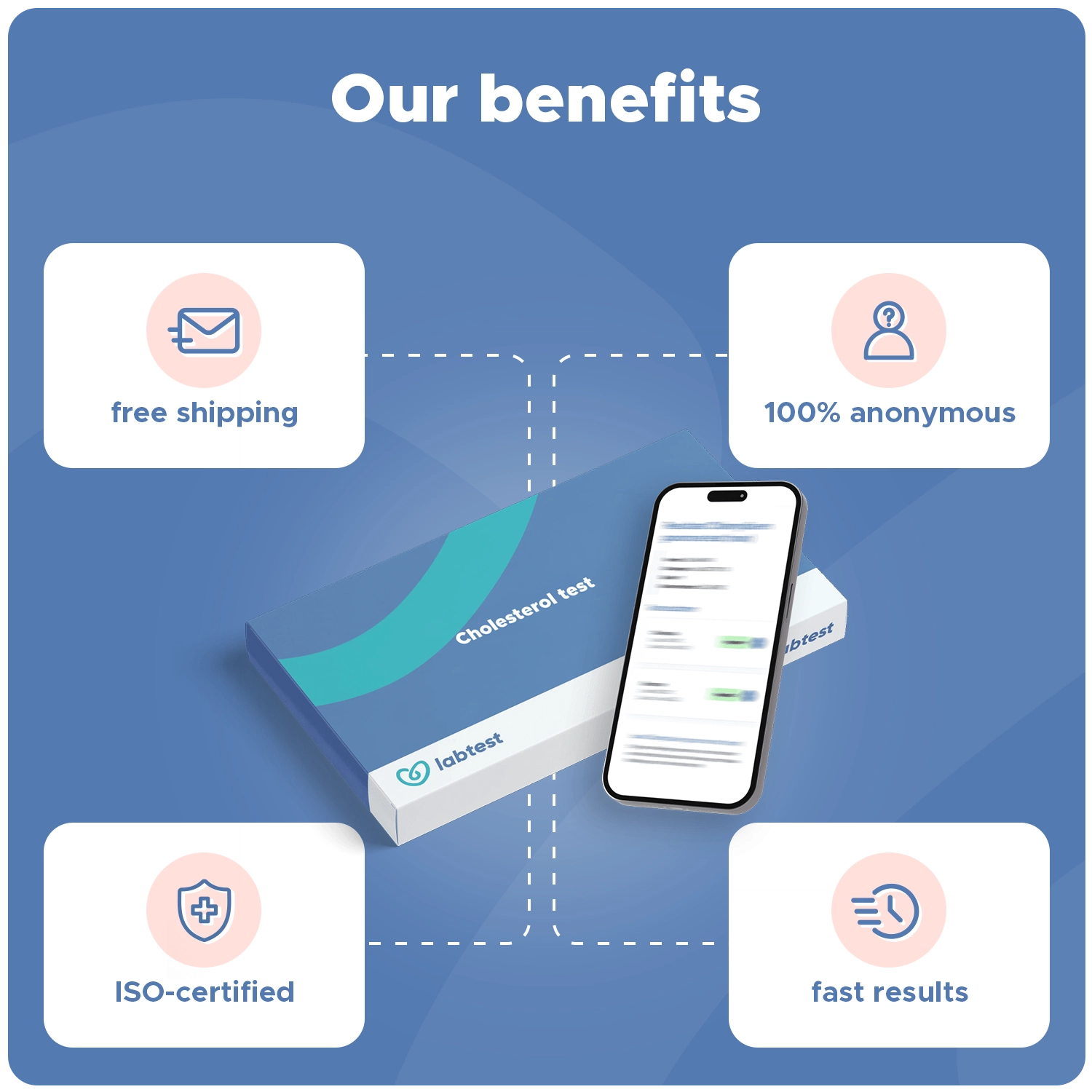
  • Test anonymously from home
  • ISO-certified laboratory
  • Reliable, discreet and secure
  • Pickup point / parcel locker available
  • Results validated by a biochemist
Now 39,00

Cholesterol test

Around a quarter of the world’s population has elevated cholesterol levels. With this cholesterol test, you can easily gain insight into your cardiovascular health. The test measures four important values in your blood: total cholesterol, HDL (good cholesterol), LDL (bad cholesterol) and triglycerides. You receive clear and easy-to-understand results, allowing you to monitor your current cholesterol levels and track changes over time. This way, you can gain insight into your heart health, all from the comfort of your own home.

Testing method

Finger-prick test

We test for:

39,00

  • Discreet verpakt en anoniem getest
  • Past door de brievenbus
  • Getest in ISO-gecertificeerd laboratorium
  • Pickup Point / pakketautomaat mogelijk
  • Resultaat gevalideerd door biochemicus
  • Meer dan 1.800 mensen gingen je voor. Beoordeeld met een 9,7!

Why take a cholesterol test?

A cholesterol test is important because elevated cholesterol levels can increase the risk of cardiovascular disease. By checking your cholesterol regularly, you can take action in good time, for example by adjusting your lifestyle or, if necessary, using medication to lower your cholesterol. It is a simple and effective way to actively monitor your health.

What does a cholesterol test involve?

A cholesterol test is an accessible way to gain insight into the levels of fats in your blood. The test measures four important markers:

  • Total cholesterol
  • LDL cholesterol (the “bad” type)
  • HDL cholesterol (the “good” type)
  • Triglycerides (fats in your blood)

This home test is based on a finger prick and can be performed from the comfort of your own home.

What is included in the cholesterol test kit?

The cholesterol test kit contains everything you need to safely and reliably collect a blood sample.
You then send your blood sample to a certified laboratory for analysis.

How do you perform a cholesterol test?

Performing the test is simple:

  • Clean your finger with an alcohol wipe.
  • Use a lancet to collect a few drops of blood.
  • Collect the blood in the tube according to the instructions.
  • Carefully package the sample in the transport bag.
  • Return everything using the prepaid return envelope.

Once the laboratory has analysed your sample, you will receive your results securely and quickly via your personal online dashboard. This gives you fast and reliable insight into your cholesterol levels, without any hassle.

Common symptoms of high cholesterol

High cholesterol usually does not cause any direct or noticeable symptoms. It is therefore often discovered by chance during a routine blood test. However, persistently elevated cholesterol can lead to a build-up of plaque in the blood vessels (atherosclerosis), which increases the risk of cardiovascular disease. In that case, symptoms may occur, such as:

  • Chest pain, pressure or a tight feeling (angina)
  • Dizziness or feeling light-headed
  • Difficulty speaking or sudden confusion (possible signs of a stroke)
  • Pain or cramping in the lower legs when walking (intermittent claudication)

Because these symptoms usually only occur at a later stage, it is important to have your cholesterol levels checked regularly, especially if cardiovascular disease runs in your family or you have other risk factors.

Understanding cholesterol

Cholesterol is a fatty substance produced by your liver and found in every cell of your body. There are two main types of cholesterol:

  • HDL (High-Density Lipoprotein) – often referred to as “good” cholesterol
  • LDL (Low-Density Lipoprotein) – known as “bad” cholesterol

A total cholesterol level above 6.5 mmol/L is considered elevated and may increase the risk of cardiovascular disease.

LDL – “Bad” cholesterol

LDL transports cholesterol through the blood to your cells. If there is too much LDL in your blood, it can build up in the artery walls. This creates cholesterol plaques that can narrow or even block the blood vessels. This increases the risk of atherosclerosis, heart attacks and strokes.

Factors that can contribute to elevated LDL levels include:

  • Unhealthy diet
  • Lack of physical activity
  • Smoking
  • Being overweight or other lifestyle factors

It is therefore important to keep your LDL level under control.

HDL – “Good” cholesterol

HDL helps remove excess cholesterol from your blood vessels and transport it back to the liver, where it is broken down. A higher HDL level is generally beneficial, as it is associated with a lower risk of cardiovascular disease.

You can increase your HDL by:

  • Exercising regularly
  • Eating a healthy, fibre-rich diet
  • Not smoking
  • Maintaining a healthy weight

HDL/total cholesterol ratio

The ratio between HDL and total cholesterol provides additional insight into your risk of cardiovascular disease. A higher percentage of HDL relative to your total cholesterol generally indicates better protection for your heart.

Understanding triglycerides

Triglycerides are another type of fat in your blood and serve as an energy source. If you regularly consume more calories than you use, your triglyceride levels can increase. Combined with high LDL and low HDL levels, this can increase the risk of cardiovascular problems.

Healthy lifestyle choices such as a balanced diet, reducing sugar intake, getting enough exercise and maintaining a healthy weight can help keep your triglyceride levels at a healthy level.

Tips for lowering elevated cholesterol

A healthy cholesterol level is important for a healthy heart and strong blood vessels. The following tips can help lower your cholesterol naturally:

  • Limit your alcohol intake to no more than one drink per day.
  • Avoid saturated fats, such as those found in fatty meat, full-fat dairy products and fried foods.
  • Stop smoking – this has a direct positive effect on your cholesterol levels and heart health.
  • Exercise regularly, preferably for at least 30 minutes a day. Consider walking, cycling or swimming.
  • Limit your salt intake to help keep your blood pressure under control.
  • Choose a healthy and varied diet rich in vegetables, fruit, whole grains, legumes, nuts and healthy fats such as olive oil or oily fish.

What are healthy cholesterol levels?

The following target values apply to adults:

  • Total cholesterol should be below 6.5 mmol/L.
  • For men, HDL cholesterol (the “good” type) should be above 0.91 mmol/L.
  • For women, the target HDL level is higher: above 1.17 mmol/L.
  • LDL cholesterol (the “bad” type) should be below 3.37 mmol/L for everyone.
  • Triglyceride levels should remain below 2.28 mmol/L for both men and women.

Test results provide a snapshot in time and can be influenced by factors such as diet, lifestyle, medication and the time of sample collection. Abnormal values do not automatically mean that you have a medical condition. If your values differ from these ranges, discuss them with your doctor or healthcare provider to determine the appropriate next steps together.

What about my privacy?

We keep your testing as anonymous as possible. How do we do that?

Your order

Your order details are retained for as long as necessary and are removed from the webshop after 2 months.

Your test kit

Your order is delivered in discreet, unbranded packaging. The test kit itself also contains no visible information about what is being tested.

The laboratory

For an anonymous analysis, you can choose to share only your date of birth and gender with the laboratory. No other personal information is shared.

Your result

You can download your laboratory result for one month. After this period, we automatically delete the report.

Your account

You can delete your account at any time. If your account is inactive for 2 years, it will be automatically deleted.

How does it work?

Your result in four simple steps
Order a test
Step 1

Order a test

After placing your order, you will receive the test kit in discreet packaging. Use the information provided in the box to activate your test kit.
You will receive your order in discreet packaging.
Collect and send your sample
Step 2

Collect and send your sample

You can easily collect the samples yourself whenever it suits you and return them free of charge in the enclosed return envelope.
With our free return envelope.
Sample analysis
Step 3

Sample analysis

Once your sample has arrived at the laboratory, you will usually receive your test result within one working day.
Results usually within 1–2 working days.
Receive your results
Step 4

Receive your results

You will receive an email when your test result is ready, and you can view your result online in a secure environment.
View and download your results in your secure online account.

Frequently Asked Questions Everything about Cholesterol test

Your cholesterol can increase due to your diet, especially if you consume a lot of fatty or processed foods. However, diet is not the only factor. An unhealthy lifestyle often plays a larger role.

Things that can increase your cholesterol include:

  • Lack of physical activity
  • Smoking
  • Being overweight
  • Excessive alcohol consumption
  • An unhealthy diet

In addition, some people naturally have higher cholesterol levels due to genetic factors. Even if you live a healthy lifestyle, you may still have elevated cholesterol. A healthy lifestyle and regular testing help keep your cholesterol levels balanced.

If your cholesterol values fall outside the healthy ranges, this may indicate an increased risk of cardiovascular disease. The guidelines are:

  • Total cholesterol: less than 6.5 mmol/L
  • HDL (good cholesterol): more than 1.17 mmol/L
  • LDL (bad cholesterol): less than 3.37 mmol/L
  • Triglycerides: less than 2.28 mmol/L

If one of your values falls outside these ranges, it is advisable to contact your doctor for further examination and advice.

The cholesterol home test helps you assess whether you are at risk of plaque build-up in your blood vessels (atherosclerosis). The LDL value is especially important in this regard.

  • LDL (bad cholesterol): A high LDL value can build up in your blood vessels and increase the risk of cardiovascular disease.
  • HDL (good cholesterol): A higher HDL value helps remove excess cholesterol from your body.
  • Total cholesterol: This value provides a general overview, but the ratio between LDL and HDL often provides more information.

The included explanation or your online report will indicate whether your values are within healthy ranges. If your values are abnormal, it is advisable to contact your doctor.

Almost everyone can benefit from checking their cholesterol, but the Labtest.nl cholesterol test kit is especially suitable for people with an increased risk of cardiovascular disease. These include:

  • People who smoke or use tobacco
  • People with high blood pressure
  • People with type 2 diabetes
  • Older adults
  • People who are overweight
  • People with a hereditary predisposition to cardiovascular disease or strokes

If you belong to one of these groups, it is especially important to monitor your cholesterol levels.

Abnormal cholesterol levels usually do not cause symptoms. This means you often do not know there is a problem until it has already progressed. High cholesterol, especially a high LDL level (“bad” cholesterol), can slowly cause your blood vessels to become narrowed or blocked. This increases the risk of cardiovascular diseases, such as a heart attack or stroke.

By having your cholesterol checked in time, you can detect problems early and take action to keep your heart and blood vessels healthy.

Cholesterol is a fat-like substance that your body needs to function properly. It is mainly produced in the liver, but you also get cholesterol through your diet.

There are two important types:

  • HDL cholesterol – this is known as the “good” cholesterol because it helps remove excess cholesterol from your blood.
  • LDL cholesterol – this is known as the “bad” cholesterol because too much of it can build up in your blood vessels and increase the risk of cardiovascular disease.

Cholesterol is important for the production of certain hormones, such as:

  • Oestrogen
  • Vitamin D
  • Cortisol

High cholesterol can be caused by a combination of lifestyle, genetics, and medical conditions. Common causes include:

  • Unhealthy diet – especially one high in saturated fats and trans fats
  • Smoking – lowers ‘good’ HDL cholesterol and damages blood vessels
  • Lack of physical activity – being inactive increases ‘bad’ LDL cholesterol
  • Genetic predisposition – such as familial hypercholesterolaemia

Chronic conditions such as:

  • Diabetes
  • High blood pressure (hypertension)
  • Thyroid disorders
  • Kidney or liver problems

A blood test is the only way to detect elevated cholesterol early, as there are often no clear symptoms.